A cardboard insert holds a product at selected contact points inside its outer box. For a bottle that might mean supporting the base and shoulders while leaving the cap clear. For a device it might mean lifting the display face above the board. Tell us which surfaces can safely touch the fitment.
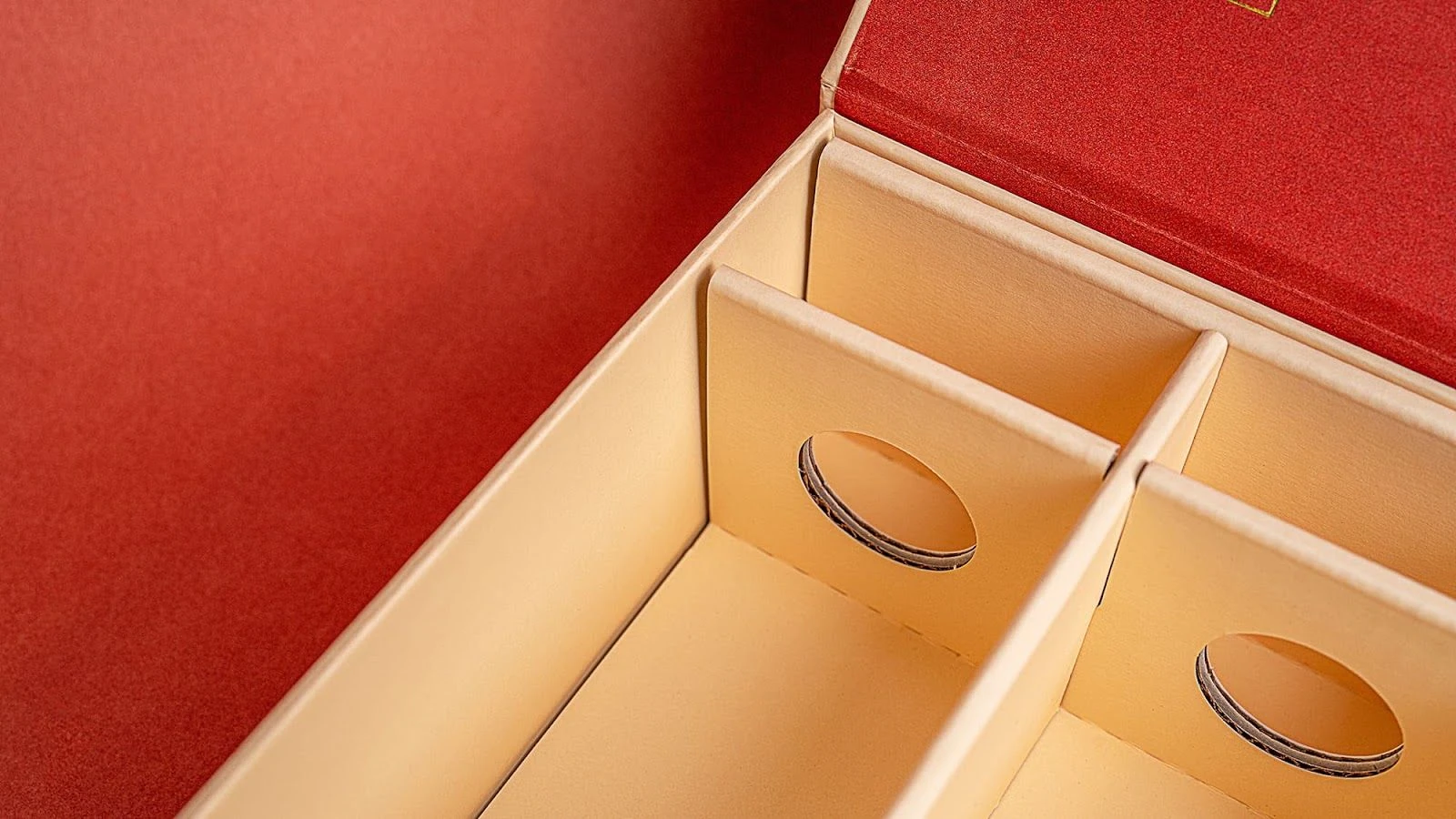
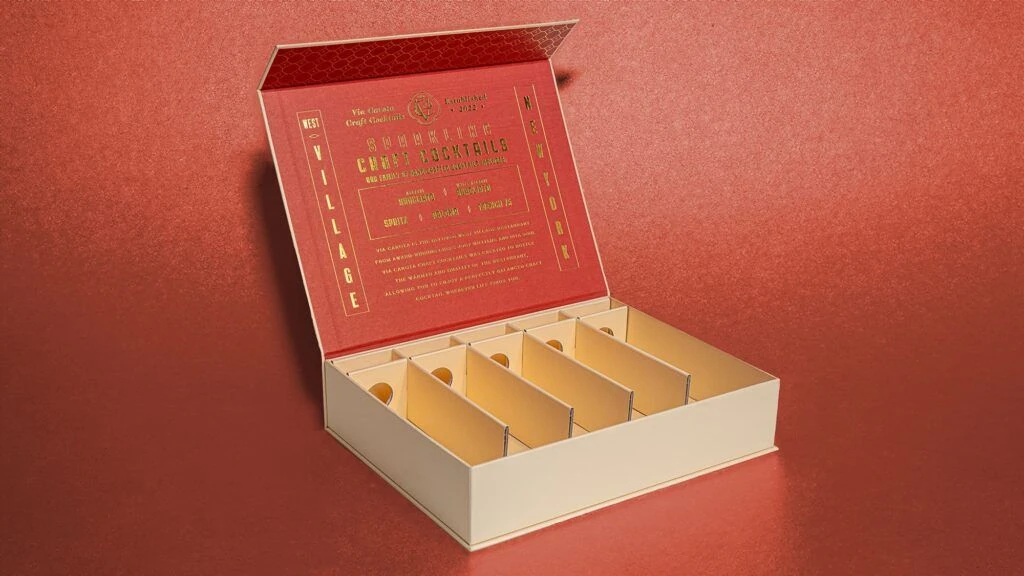
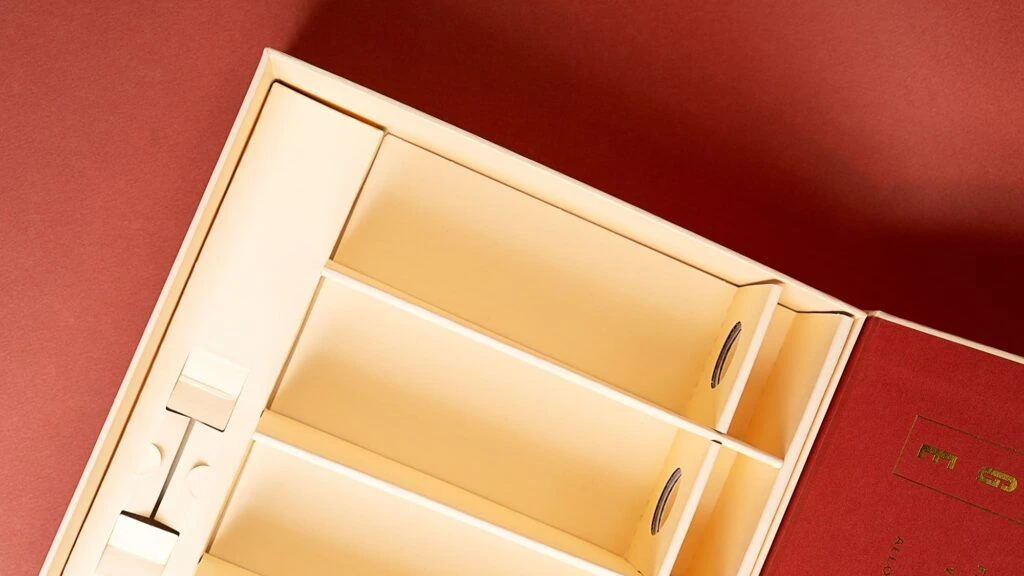
Oval finger openings and folded walls in a cream board insert.
Map the contact points
Send the product outline, packed orientation and weight, together with the box's usable inside dimensions. Mark fragile areas, protruding controls and the places where a hand can grip the product. These details determine where to cut and where to leave support.
Choose a folded card or corrugated fitment
Folded paperboard can create crisp, printable compartments for a presentation set. Corrugated board adds depth for supports and cradles. The shape and span of the unsupported sections matter as much as the material name.
Custom Cardboard Box Inserts in Detail
Use these examples from other packaging suppliers to compare structures and finishes for your project.
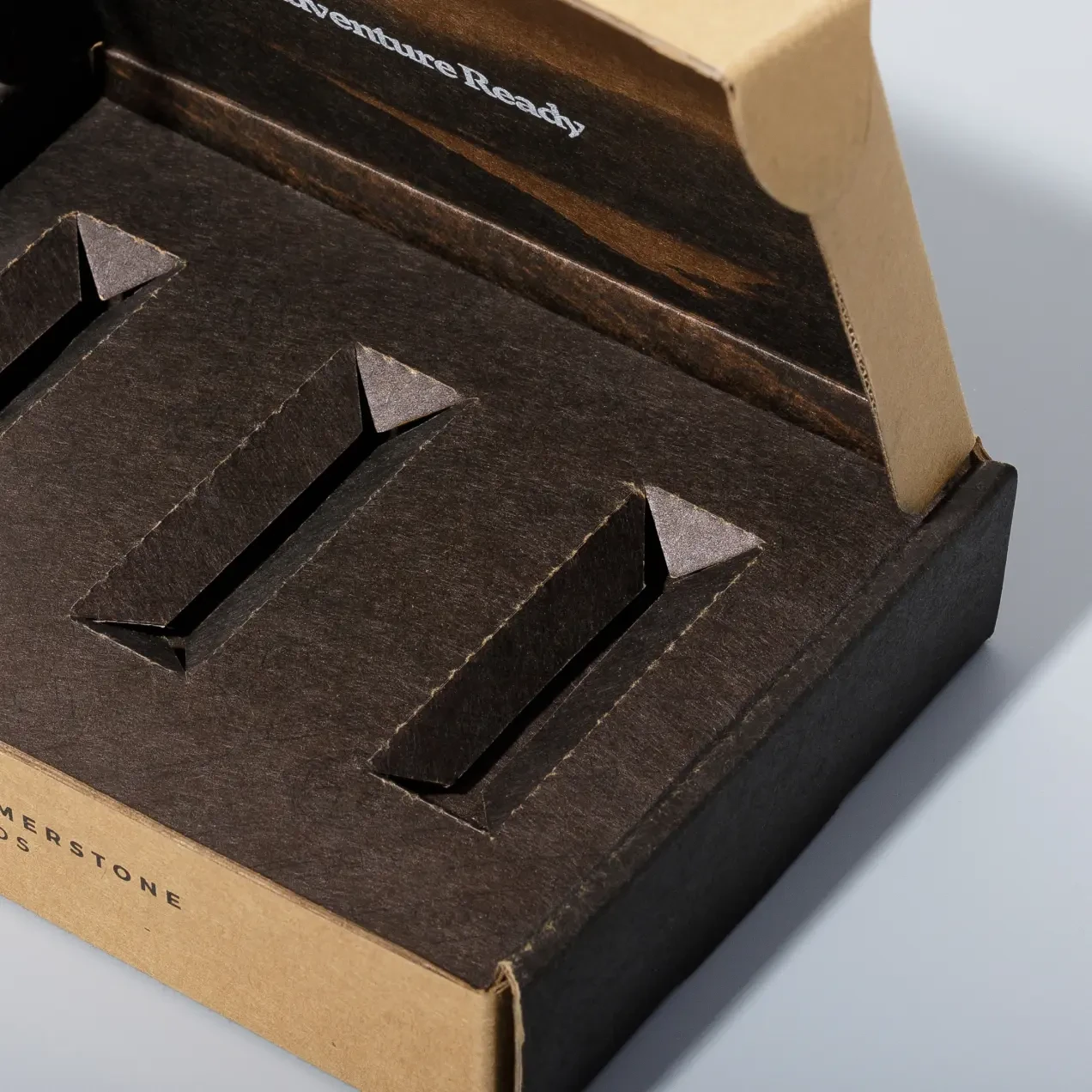
Cut slots and exposed edges in a dark insert fitted inside a box.
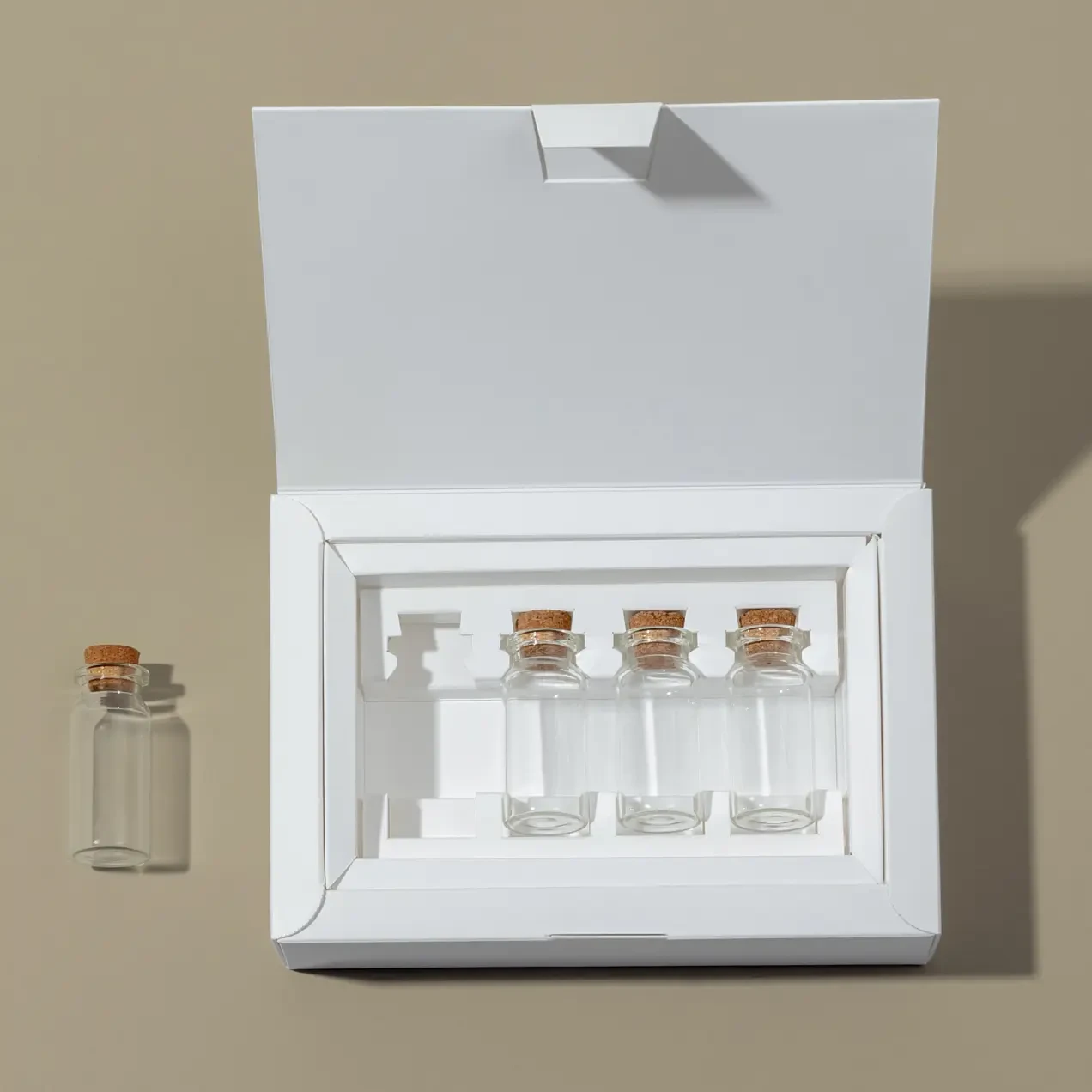
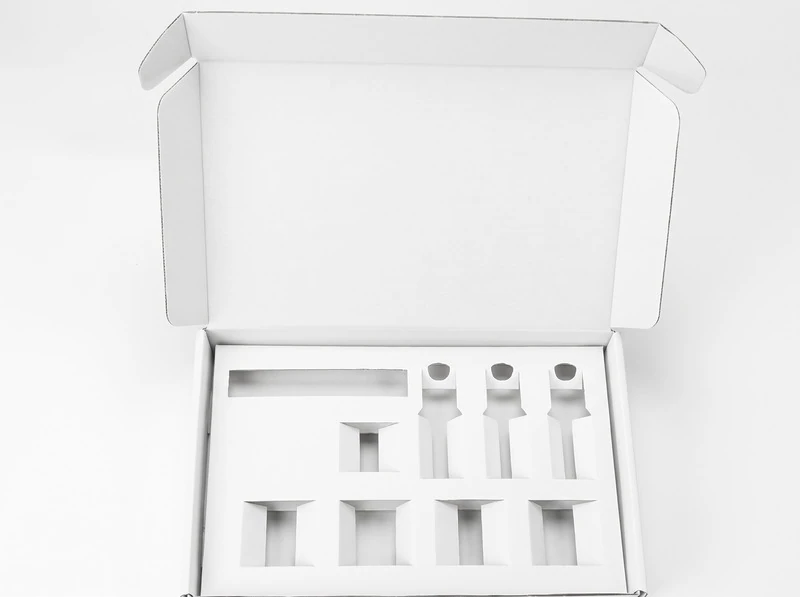
White insert holding small bottles at separate positions.
Open presentation box with individual folded board compartments.
Top view of interlocking tabs and creases inside a board fitment.
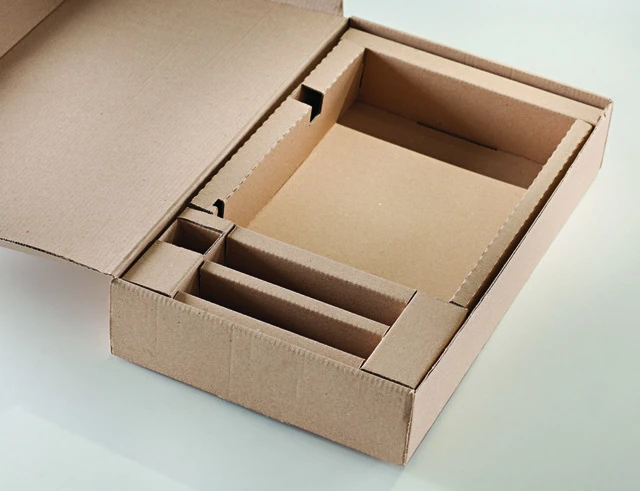
Kraft fitment seated in an outer carton with a separate side compartment.
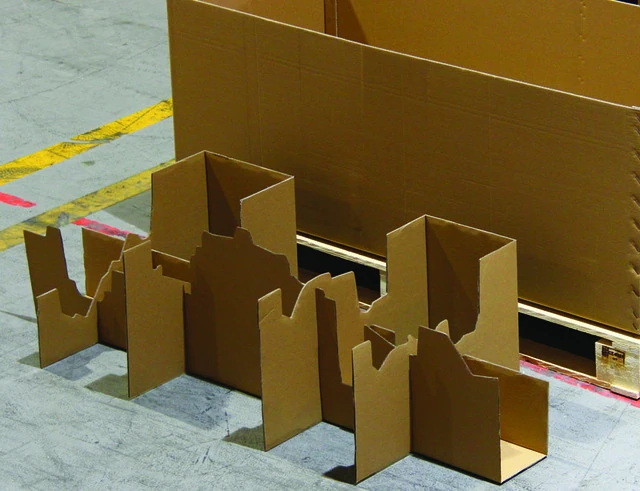
Folded board supports standing independently on a packing bench.
White tray with separate openings for a product and its accessories.
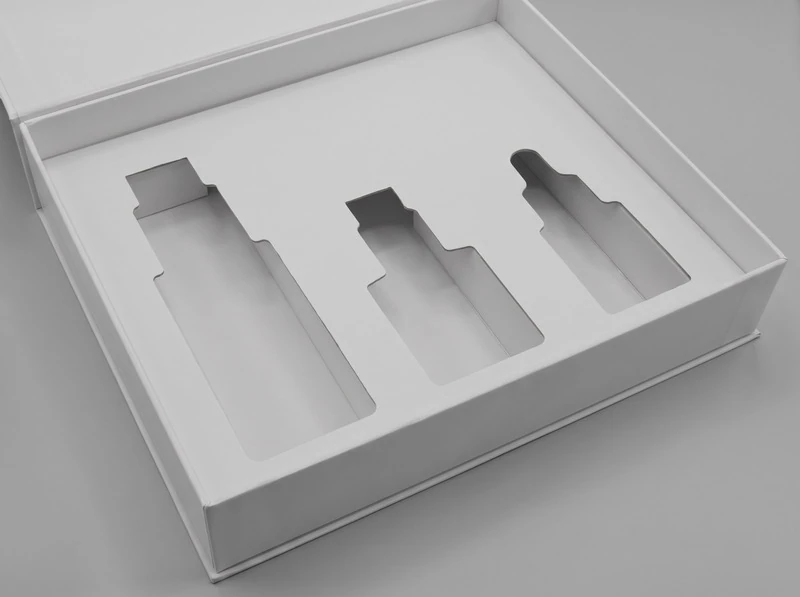
Three bottle-shaped cutouts showing shoulder and neck profiles.
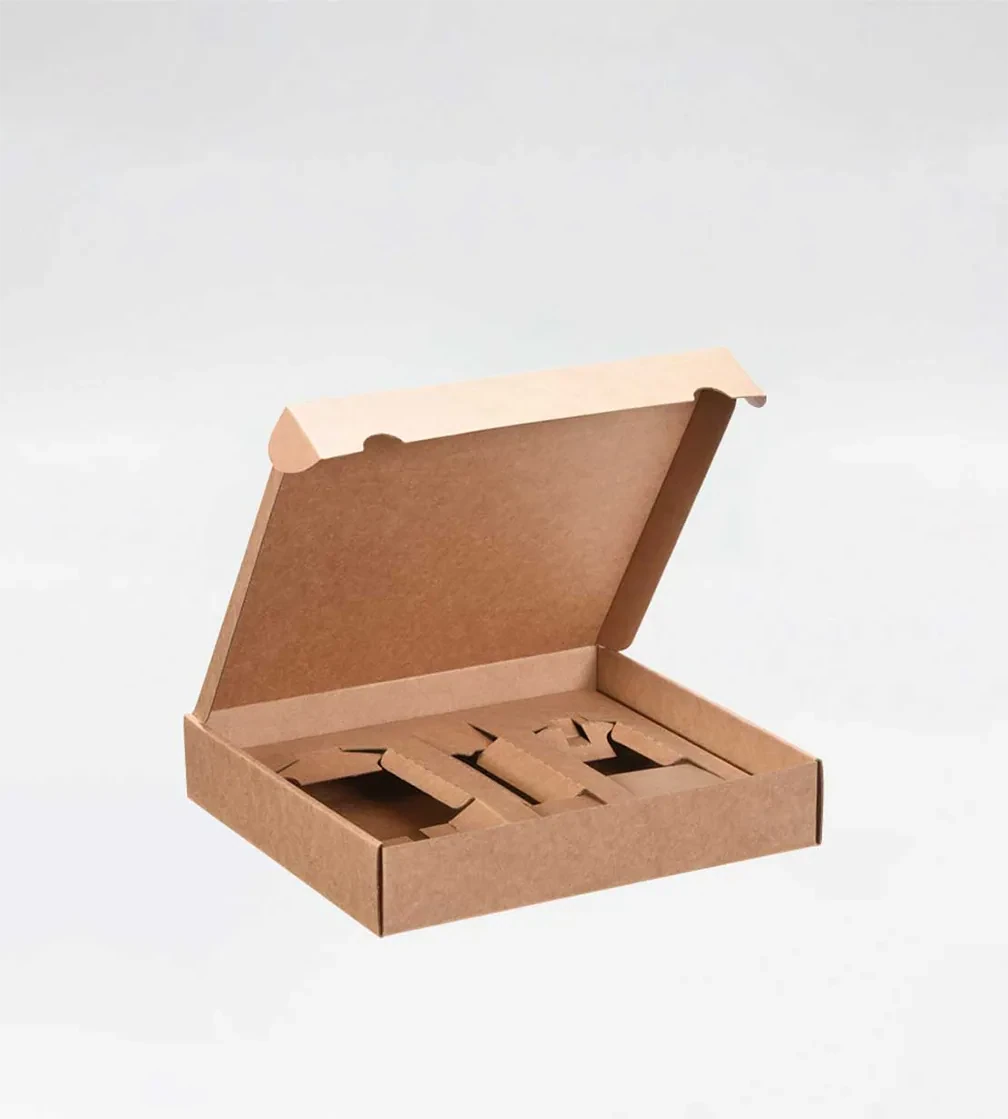
Kraft insert with shaped openings inside a matching carton.
Buyer Questions
Will an existing box accept a new insert?
Share a finished outer box if available. Measure the narrowest inside dimension, any lid intrusion and the usable height. Test the insert with the real item before fixing the cutting layout.
How should we approve the fit?
Load and remove the item several times. Check for pressure marks, finger access, movement and fit after closing the box. If transit protection is part of the brief, specify the test separately.
Prepare an insert quote
Include product sample or dimensioned drawing, weight, outer box inside dimensions, contact and no-contact areas, packing sequence, quantity per design.