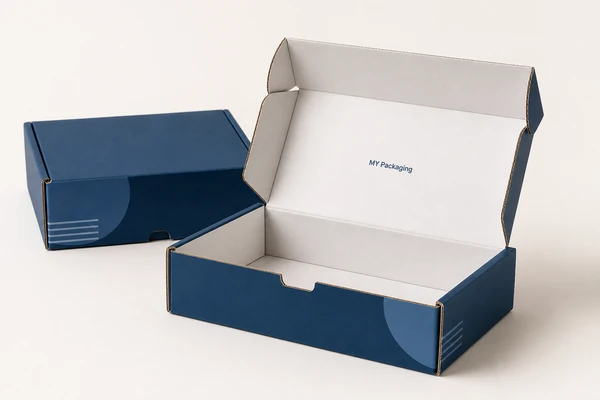
A corrugated mailer is a folded box with an integrated lid. MY Packaging develops custom corrugated mailer boxes for e-commerce orders, subscription kits and branded deliveries. We review what goes into the box, how your team packs it and how the finished parcel will be handled. That gives you a starting point for the board, closure and print before you approve a sample.
Lay out one complete order the way your team will pack it. Include any retail pack, insert, instruction card and accessory. Measure the space they need in the assembled box. A product dimension by itself can miss the room needed to place the item, lift it out or close the lid over the tallest part.
Use inside length × width × height to agree on fit. Use the outside dimensions of the assembled parcel to check carrier limits, shelf space and outer carton fit. Record the packed weight with the board, insert and contents included. If several SKUs share one mailer, list the largest configuration and the one most likely to move inside it.
If the branded box will go directly into a parcel network, include the route, label size and sealing requirements in the brief. For fragile goods or a presentation box with a finish that needs protection, ask us to review the mailer and a separate outer carton together. Compare corrugated box formats
| Decision | What to confirm for your order |
|---|---|
| Board and liner | E-flute is one starting point for a compact mailer. Share the packed weight, box span and handling route so we can review the board. Bring a kraft or white-liner reference if the board color is part of the design. |
| Front closure | A roll-end tuck-front mailer folds up from a flat blank and secures at the front. Check that the packed box closes smoothly and that the closure works with your sealing process. |
| Print sides | Choose where the artwork will be seen. Exterior print is visible at delivery. Interior print appears after opening. Reserve a flat area for labels, and mark it on the artwork. |
| Product retention | A folded insert or divider can keep products and accessories in their intended positions. Ask how it affects the usable space and the way your team loads the box. |
| Packing workflow | Tell us whether boxes are assembled by hand and how many items go into each box. Have someone from the packing team try the folded sample during review. |
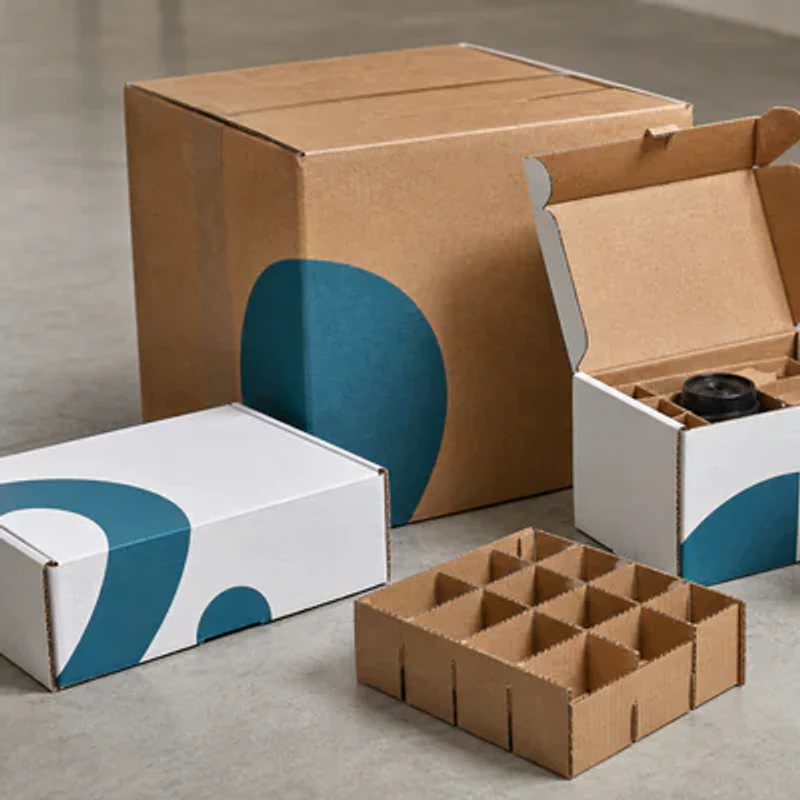
In one of our published packaging examples, the brief called for better protection during delivery and a clearer presentation on opening. The proposed design used a corrugated mailer with a roll-end tuck-front closure and inside flexographic printing. At the sample stage, the team checked the structural sample in a drop test and reviewed the legibility of the inside print. The example shows why structural fit and print readability are separate checks for the same pack. See the packaging project examples
That depends on the contents, packed weight, closure and carrier handling. Include the delivery route and product protection requirements so the full pack can be reviewed. Keep a separate outer carton in consideration for heavier or fragile products, or for finishes you want protected during transit.
Send the actual dimensions of the product as it will be packed, any known usable inside box dimensions and the target maximum outside size if you have one. Mark each set as product, inside box or outside parcel.
Tell us which panels you want printed and share the artwork. We review suitable print options against the board, artwork, order quantity and finish requirements. Include a label-free artwork version or mark the label area on the layout.
Yes. Share the file along with the current inside dimensions, board specification if known and photos of the folded box. Mention any fit, closure or print issue you want to solve before sampling.
The practical order quantity and schedule depend on the size, board, print and setup. Send the quantity by SKU, shipping destination and your target delivery date so sampling, production and shipping can be assessed for your project.
Send the product dimensions, items per box, packed weight estimate, order quantity and destination. Include any existing dieline, inside or outside artwork preferences, insert requirements and target delivery date. A photo of the complete pack layout is useful even at the early planning stage.