
Use a regular slotted container (RSC) as the baseline when the main job is outbound transport or consolidation. Compare a die-cut corrugated mailer when the shipper also has to present the product, orient an insert or close with a specific tab. A mailer can be a shipping box. The practical choice is between two constructions for the same packed product and delivery route.
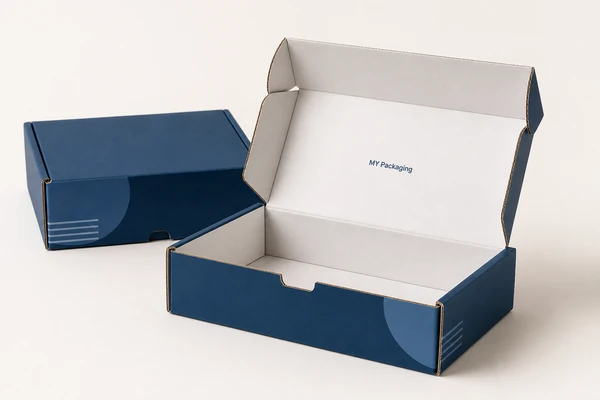
Compare the two structures at the packing bench
The Fibre Box Association identifies the RSC as style 0201. Its outer flaps typically meet along the center seam. The packing line should test the specified tape or adhesive closure at the actual carton weight. A die-cut mailer uses shaped panels, folds and locking features. Its wraparound geometry can support a controlled opening, but tabs that are easy to close on a workbench can still slow down a high-volume line.
| Purchasing question | RSC baseline | Die-cut mailer baseline |
|---|---|---|
| How is it closed? | Specify tape, glue or another qualified closure | Specify the lock, tape or seal and test accidental opening |
| How does it hold the product? | Test dunnage, fitted pads or partitions | Test sidewall geometry, insert fit and clearance for locks |
| How is it opened? | Plan tape removal and safe cut clearance | Check opening sequence, product presentation and return closure |
| What costs change? | Board, print, setup, tape and labor | Board yield, cutting die, print, assembly and closure consumables |
Specify the product load before choosing a board
Record weight, dimensions, most vulnerable face, and how much movement the product can tolerate. Compare external length, width and height after packing. Matching internal dimensions can produce different outside dimensions once mailer walls, inserts or closures are built. Quote the proposed board and flute together with the design, expected gross weight and distribution route. A flute name alone says little about how a finished shipper performs.
A mixed channel order may need separate solutions. For case replenishment, a master RSC can consolidate individual retail packs and stack on a pallet. For direct-to-consumer orders, a mailer may hold one pack with a fitted insert and present the brand on opening. Cost each route with the right pack quantity. A one-size-fits-all shipper can increase void and freight on your smaller orders.
Pilot one complete shipping unit
Give packers samples of each build with the product, all inserts, tape or seals and the actual shipping label. Time the pack and scan the label after closing. Check damage risks near folds, locks and corners. Agree what counts as an unacceptable product fault and what cosmetic damage to the package your channel will accept. Select a test that matches the route. For example, ISTA lists Procedure 3A for applicable parcel shipments. Confirm the procedure with your lab or logistics team for the packed product you will ship.
Request an equivalent quote
Ask for flat ship quantities, packed outer dimensions, master-carton dimensions, die ownership, units per pallet and the closure material. If opening presentation is important, include the face the customer should see first. Review custom mailer boxes and corrugated boxes to define the two builds you want to sample.
