
A custom packaging RFQ should give every supplier the same product, box specification, quantity tiers and delivery basis. Ask suppliers to document exceptions in writing. That makes it possible to tell whether a lower price comes from a more efficient build, a different board, or an omitted charge.
1. Identify each SKU and the product it must hold
Supply the product’s maximum dimensions, weight, variation across units and orientation in the box. For a set, add a simple layout showing each component. Flag fragile surfaces, caps that must stay clear and anything that can leak or move. If the factory will pack from a product sample, identify the sample revision and when it will arrive.
2. Define the box and the measuring convention
Name the structure or attach a reference sketch. Give internal usable dimensions in millimetres, say which side is the opening and identify any clearance already included. Ask for packed external dimensions separately when you plan shelf space or freight. For standardised trade-item measurements after the design is final, use the relevant GS1 measurement convention. A sketch and a dimension sequence avoid confusion on trays and non-rectangular boxes.
3. Lock materials and separate alternatives
Specify the board grade, required caliper or corrugated construction, wrap and insert material where relevant. Define the result you need if you want the supplier to propose a grade. Request a base quote and a clearly identified alternative with the differing caliper, appearance or performance evidence. Require your approval for any substitution that changes the agreed specification.
4. Issue versioned artwork and finish requirements
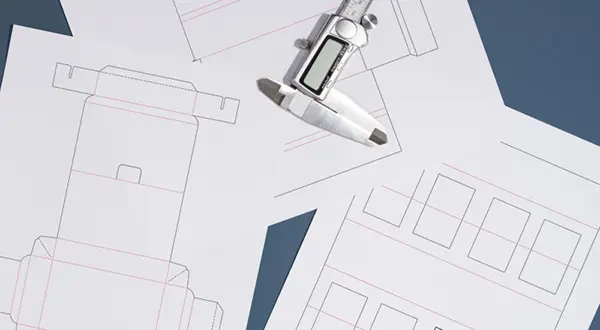
Send a PDF and dieline with dates or revision IDs. Map finishes to the panels they cover. Identify artwork versions, inks, lamination, foil or embossing, and ask suppliers to flag constraints such as small reversed type or foil too close to a fold. Use dielines and templates to prepare the file package. If the product dimensions are final but the structure is still open, ask for structural design as a separate item.
5. Define what a sample must prove
Describe which sample decision is due first: product fit, printed color, assembly, or production finish. Identify the physical reference and fault conditions the buyer will check. Ask for sample fees, freight, revision allowance and the production stage the sample represents. Confirm whether sample or tooling fees are creditable, and under what conditions.
6. Quote the same quantities and pack-out
State quantities by SKU and artwork version. For example, ask for 1,000 and 3,000 pieces per SKU if those are meaningful forecast tiers. Specify how many units go in each master carton, whether goods ship flat or assembled, and whether the warehouse requests labels or pallets. Ask the vendor to state expected master-carton dimensions, weight and counts for each tier.
7. Separate unit cost from one-time and logistics charges
Provide a named delivery point and the trade term your team wants quoted. Ask for currency, quote validity and exclusions. Have all factories return the same fields so purchasing can build a comparable total.
| Quote field | Reply to request |
|---|---|
| Unit price | Price per SKU at each stated quantity, with included components and finishes |
| One-time items | Dies, plates, samples and any third-party test fees listed individually |
| Pack-out and delivery | Cartons, labels, pallets, transport and handoff point, with exclusions |
| Schedule | Sampling and production dates, plus the approval or deposit each date assumes |
| Exceptions | Exact specification, drawing or commercial deviation and its cost effect |
8. Reconcile every exception before issuing the PO
Send the same clarification and revised files to all shortlisted suppliers. Compare prices against the same approved revision and pack-out. If one quote omitted the insert or used flat delivery while another included assembly, ask for a corrected line item. Carry the final specification, quote reference and approval milestones into your purchase order. Share a versioned packaging brief if you want MY Packaging to review feasibility and quote the build.
