
For a beauty gift set, choose the insert and the box together. A set with a tall pump bottle, a heavy jar and a sachet needs three different types of support. Decide how the customer should see and remove each item, then verify that the same arrangement survives packing, storage and the intended sales channel.
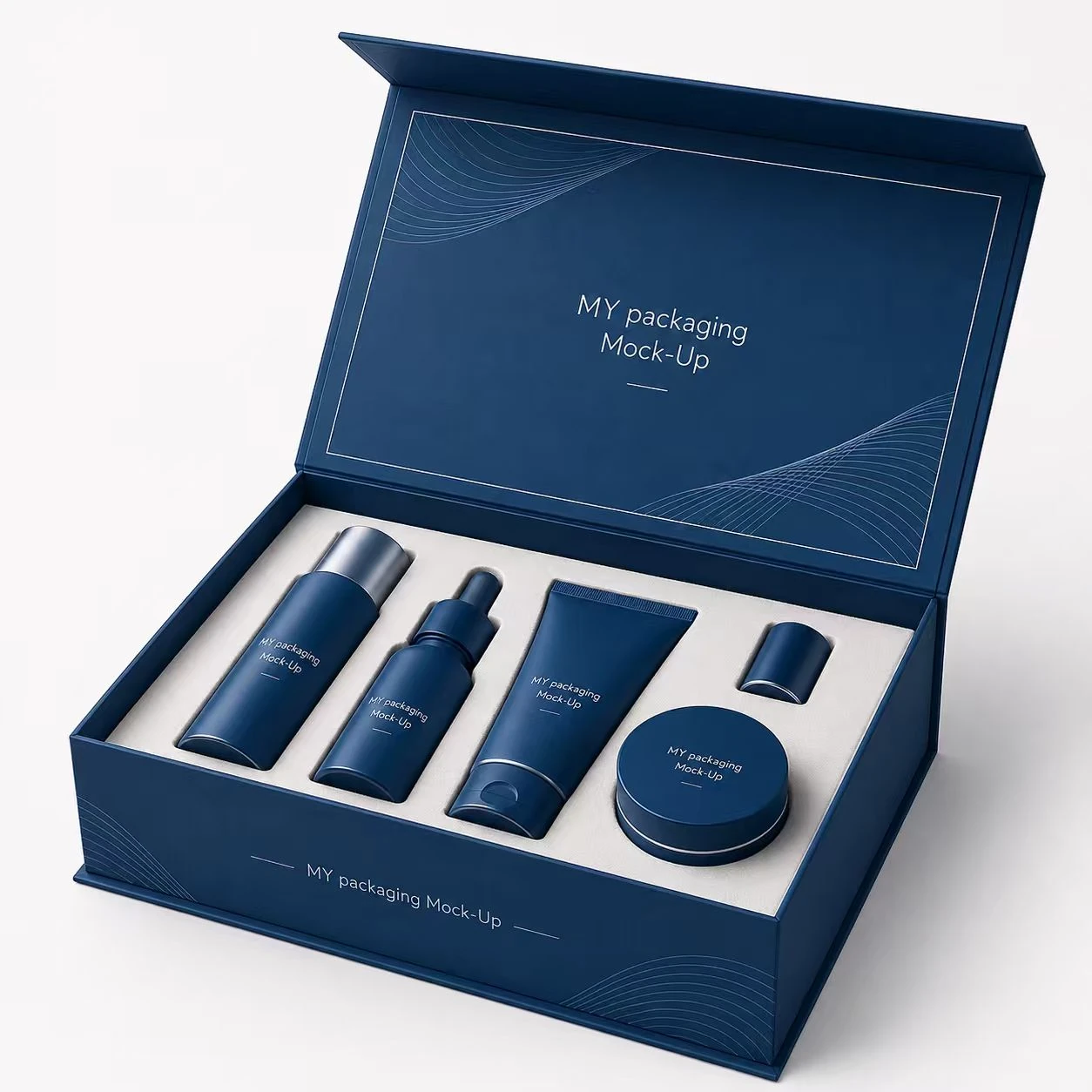
Start with a component map
List each part’s maximum size and weight, cap or pump dimensions, label orientation and surfaces that must remain unmarked. Give the packer a drawing of the loaded tray viewed from above. Mark the surfaces that may carry load and the clearances needed around pumps and caps. If the line handles several bottle suppliers, provide dimension ranges or samples of the widest and tallest versions. Use an intentional grip notch where a buyer is likely to struggle to remove a jar.
1. Rigid lid-and-base box with a fitted display tray
Quote this for a set where the whole assortment should be visible on opening. Use a stepped or divided tray when products have different depths. In the trial, lift the lid and check that every label reads correctly and that the items can come out without pulling on pump heads. Ask how the supplier will protect wrapped corners in the master carton and whether inserts arrive loose or fitted.
2. Folding carton with a formed paper insert
Compare a folding design for retail shelf sets and quantity runs where inbound storage and predictable erection matter. Confirm which components ship flat and how they lock together at the bench. On tall bottles, check whether the loaded pack stays square with its closure engaged. On a display window, check panel stiffness and whether the actual product labels align with the opening.
3. Sleeve over a tray or drawer box
Use a sleeve when the artwork needs a continuous wrap or the set should reveal its products in sequence. Ask for the loaded tray to be sampled at the tightest fit expected across the board and finish tolerances. Test withdrawal force in the intended direction and check for scuffing at the sleeve edge. If a seasonal sleeve uses the same tray, test every sleeve finish and edge geometry that changes the fit.
4. Corrugated mailer with a retained insert
Quote a mailer when the gift set will travel as a parcel and presentation should begin at opening. Check whether dividers keep glass pieces apart and the insert can resist lifting during handling. Specify whether this will be the shipping unit or will sit inside an outer shipper. Test the package in the configuration that the warehouse will actually close and dispatch.
Approve the build at the packing bench
| Test on the loaded sample | Decision to record |
|---|---|
| Pump head, cap and jar clearance | Which surfaces can touch packaging, and where there must be a gap |
| Product restraint and removal | Whether items stay in their positions and come out without damage or excessive force |
| Packing sequence | Seconds per set, insertion orientation and when an operator needs to correct the tray |
| Shelf and shipping checks | Acceptable appearance after handling and applicable tests for the route |
If a gift set goes to retail and parcel channels, define the packed configuration and acceptance limits separately. ISTA’s guide to selecting test procedures discusses distribution environment and damage criteria. Send the component map, target channels, order quantities and sample deadline when requesting beauty and cosmetics packaging. Use inserts and accessories to discuss the support points each item needs.
