
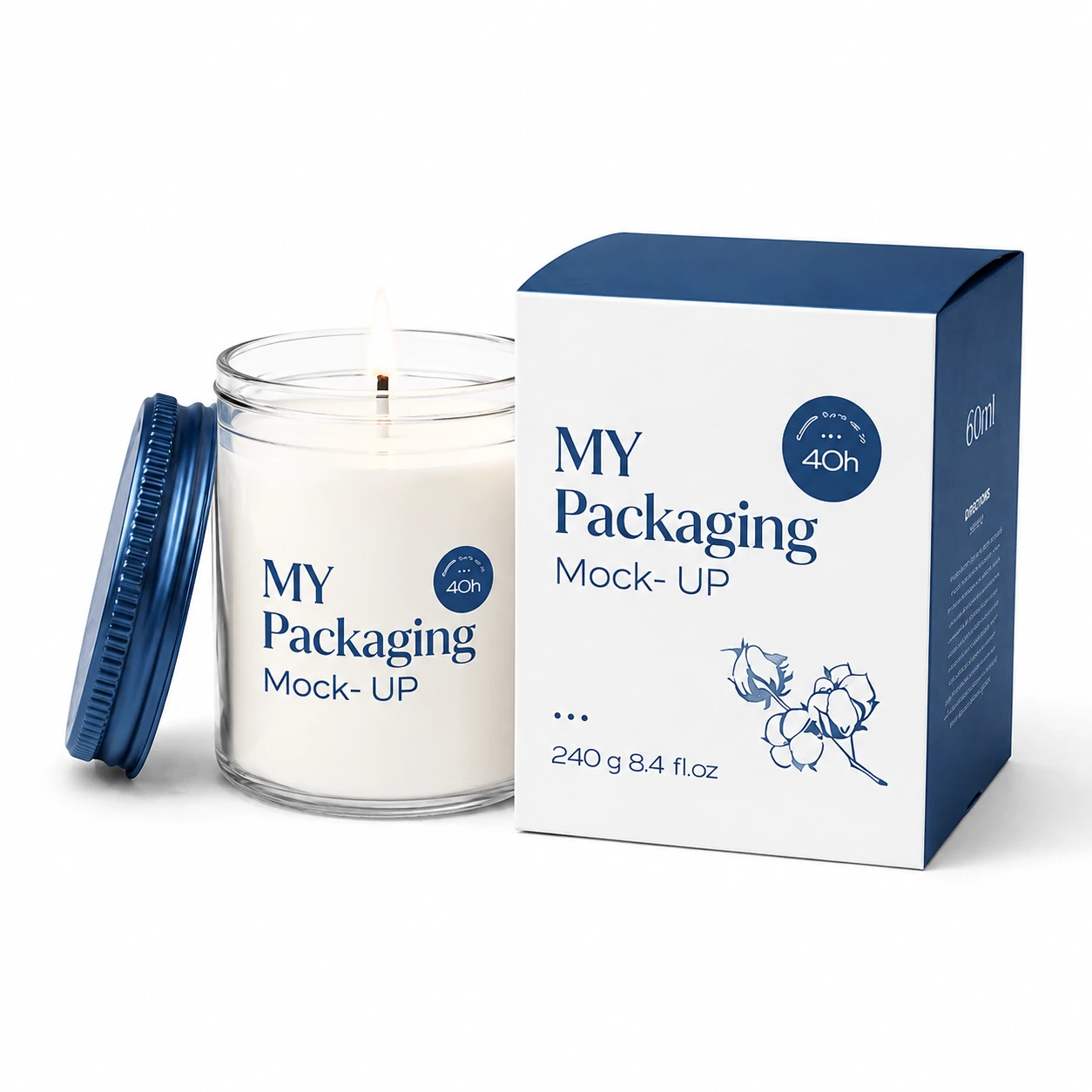
If the same glass candle sells on shelves and ships individually, start with one retail carton and a separate parcel protection system. For store replenishment, approve the retail carton as part of the complete master-carton pack. If the retail carton will double as the parcel shipper, qualify that exact design with the filled jar, lid, closure and label for the intended parcel route.
Decide which unit sees each type of handling
| Channel | What has to work | Sample to request |
|---|---|---|
| Store replenishment | Shelf appearance, barcode placement and stable cases when moved to retail | Finished shelf carton plus dividers and the full master-carton load |
| One candle shipped to a consumer | Jar protection, closure retention and readable parcel label on arrival | Finished retail carton inside a sized shipper, or a single ship-ready design |
| Gift sets shipped in mixed orders | Separation between jars, limited movement and a predictable unboxing sequence | Loaded gift tray and outer box with every included component and closure |
The same insert may perform differently when the shipper holds several retail units. Check spaces between heavy jars and the compression from the load above. Confirm whether warehouse staff pack a fixed assortment or mix different sizes at the bench.
Locate fragile points before choosing the insert
Send filled units or representative samples that match weight and geometry. Identify the jar shoulder, base, lid and surfaces prone to scratches. Ask the designer to show where a pad or insert carries load, where cushioning can deform and where glass could contact another jar or the outer wall. Create clearance around a lid or projection when it cannot safely support the candle. Test the tolerance range across actual jars so a tight fit on one sample does not bind or crush another.
Run two real pack-outs
Compare a printed shelf carton in a fitted corrugated overbox with your proposed single ship-ready alternative. For each, use the actual insert, tape or seals, labels and any dunnage. Time the warehouse packing cycle and record outer dimensions and gross weight after closure. Include an order that represents common mixed-carton or gift-set handling if you expect to ship it frequently.
Agree acceptance criteria before testing. Broken glass, a loose lid or a leaking product affect saleability. Crushed corners, label scuffs or surface marks need their own cosmetic limits for retail-ready packs. Review test results against the actual parcel or retail distribution profile. ISTA’s package design and testing guidance is a starting point for choosing a lab and test procedure. Review retesting when the jar weight, insert, closure or outer pack changes.
Compare the cost per delivered, saleable candle
Ask for the carton, inserts, outer box, packing labor, freight dimensions and setup costs on each option. For a small parcel mix, a reusable retail format plus a second shipper size can be more flexible than qualifying every retail carton to ship alone. If most units travel singly, a ship-ready carton may reduce components and warehouse steps. Its value depends on the pilot results and the retail appearance you accept after delivery.
When requesting candle packaging, provide filled weight, jar dimensions, component tolerances, channel mix, expected order combinations and the cosmetic or damage limits for each route. Request separate retail-case and parcel pack-out drawings so both can be approved by the appropriate team.
